A Randomly-Selected USA Congress

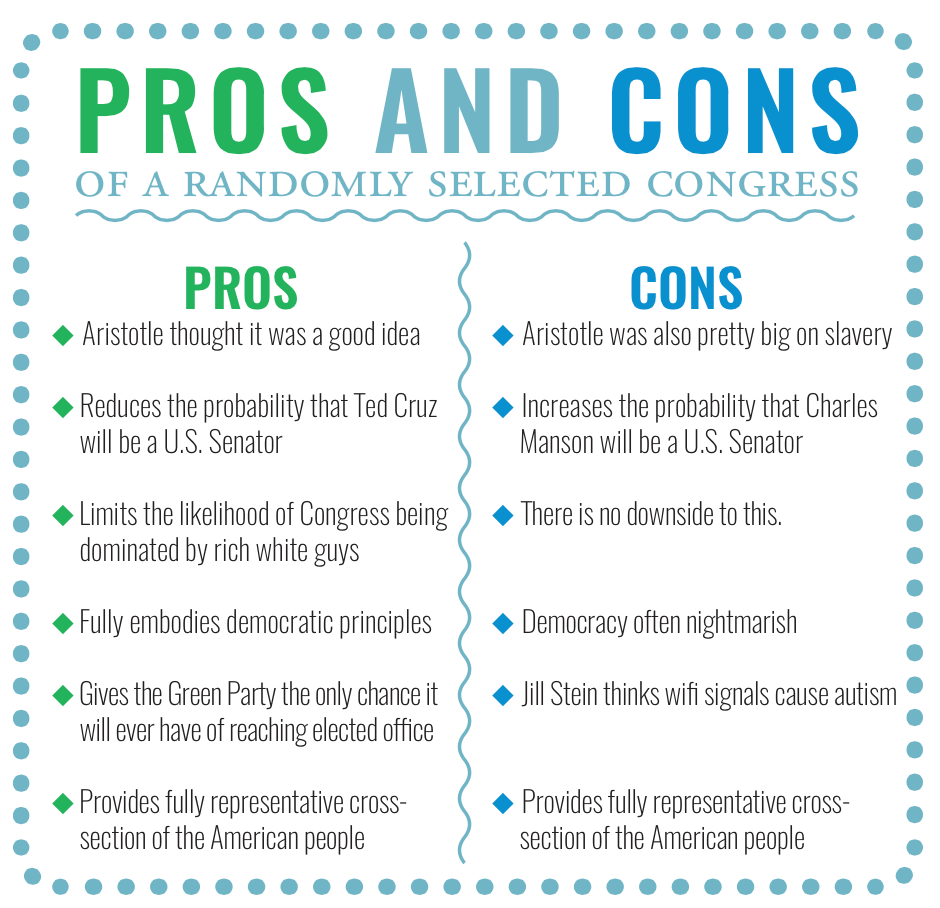
Sortition has all the benefits of campaign finance reform, and then some. For starters, the great Sortition Amendment will be much simpler and easier to understand than whatever nightmarishly complicated reform scheme it would take to make elections viable. Legislators will be chosen by lot from the entire adult population. Boom, no more campaign spending: the $1,771,368,063 that went into Congressional campaigns last year can now be donated instead to scientific research and children’s hospitals and dirigible-based public transport systems and other such useful things. Without reelection campaigns hanging over legislator’s heads, nobody can be honeyed or coerced into advancing particular legislative agendas, except by the kind of quid pro quo, “here’s a nice sack of cash” methods that are more easily punishable as corruption. Interest groups will still lobby to persuade legislators, of course, but they won’t be able to influence their nomination or the length of their tenure.

Will the Sortition Congress actually be good at making laws? Who knows. Will they be worse at making laws than the Congress we have now? Is that even possible?

 

We Met the Mind Behind the Rubik's Cube — Mashable Originals
Have you even given up, helplessly, on a Rubik’s Cube? What was meant to be a tool that helped students learn about space and design is now a competition to see who can finish it faster with their eyes closed. Love it or hate it (because you can’t complete it), the cube has become a staple of human culture. This is Erno Rubik, the man behind the legacy. 


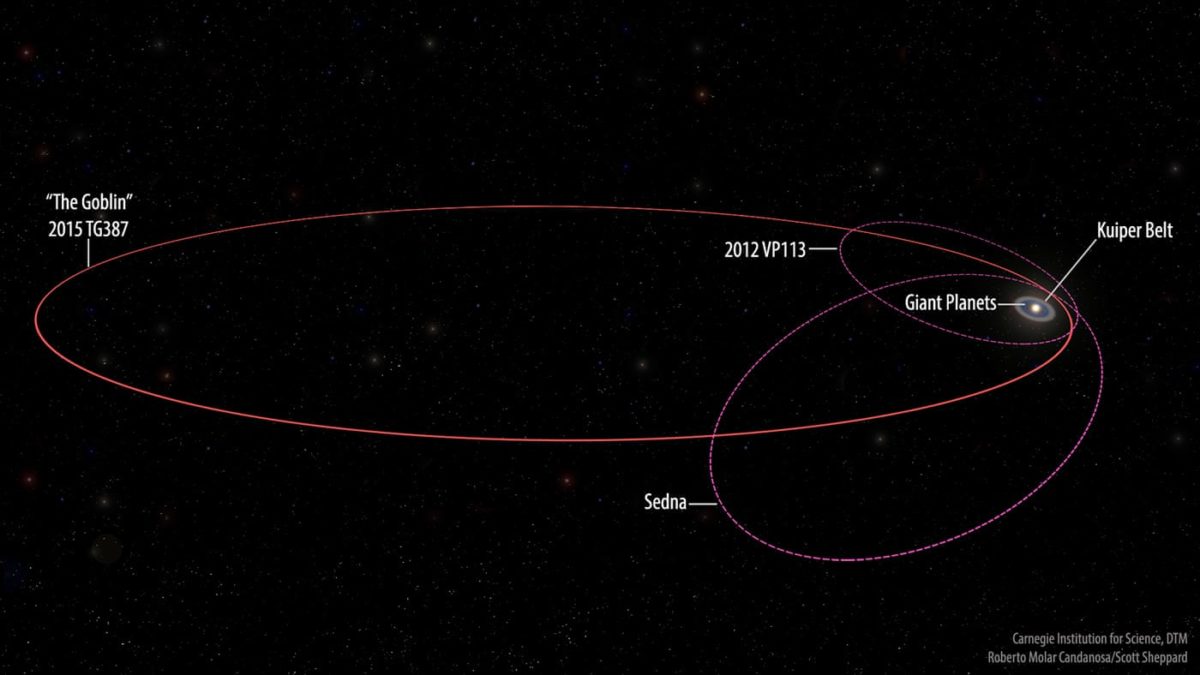
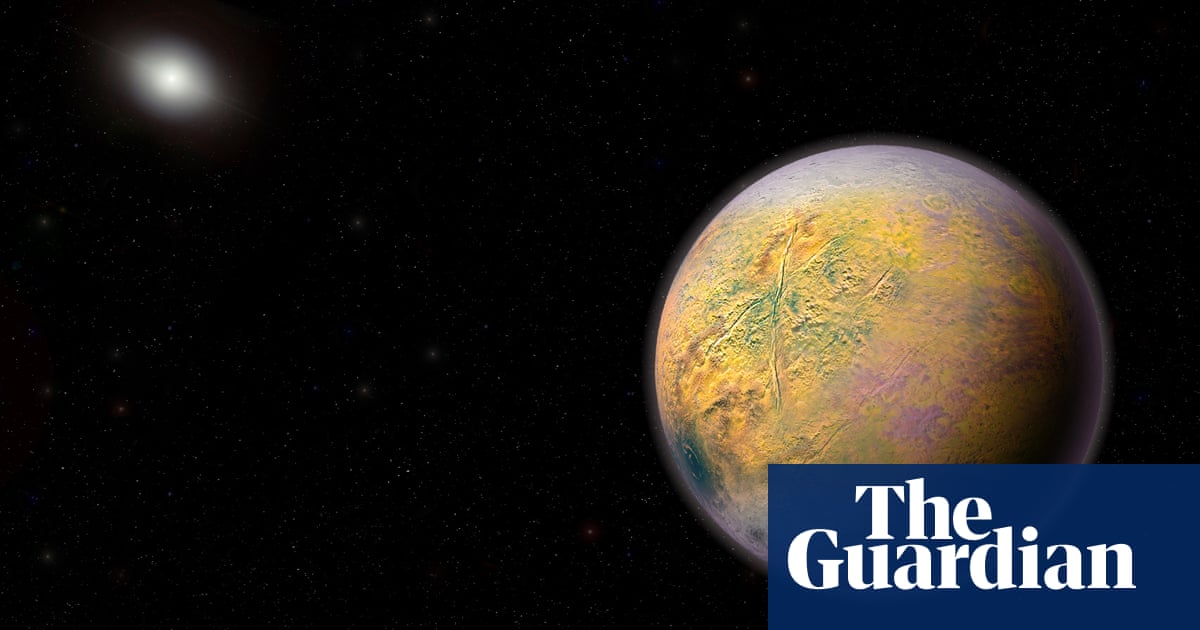
New Dwarf Planet Points The Way to Planet Nine

Astronomers made the discovery while hunting for a hypothetical massive planet, known as Planet Nine, that is suspected to be in orbit far beyond Pluto in a mysterious region known as the Oort Cloud. Planet Nine has not yet been seen directly, but The Goblin appears to be under the gravitational influence of a giant unseen object, adding to astronomers’ certainty that it is out there.
For more, Scientific American:


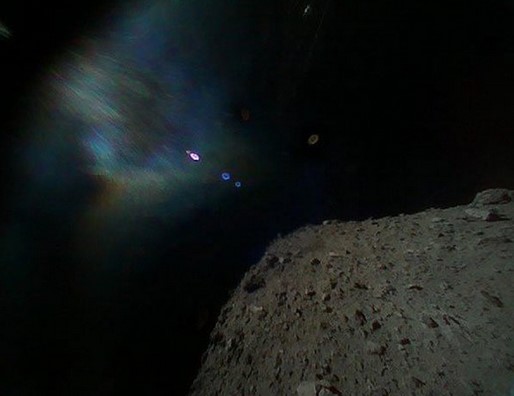
Japanese Hopping Robotic Rovers Land On Asteroid

In order to complete the deployment, the main spacecraft of the Hayabusa2 mission lowered itself carefully down toward the surface until it was just 180 feet (55 meters) up. After the rovers were on their way, the spacecraft raised itself back up to its typical altitude of about 12.5 miles above the asteroid’s surface (20 kilometers).


Mr. Rogers: Google Animated Doodle

Google’s stop-motion animation arrives like a welcome online balm to celebrate the 51st anniversary of Fred Rogers’s show.
More: the making of the doodle.  https://www.youtube.com/watch?v=vuFow3MQXsQ


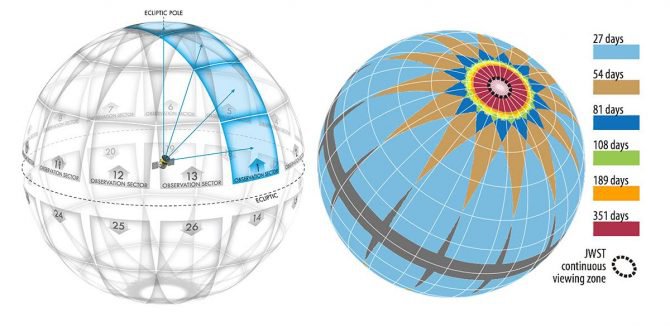
Two New Exoplanets Discovered by TESS

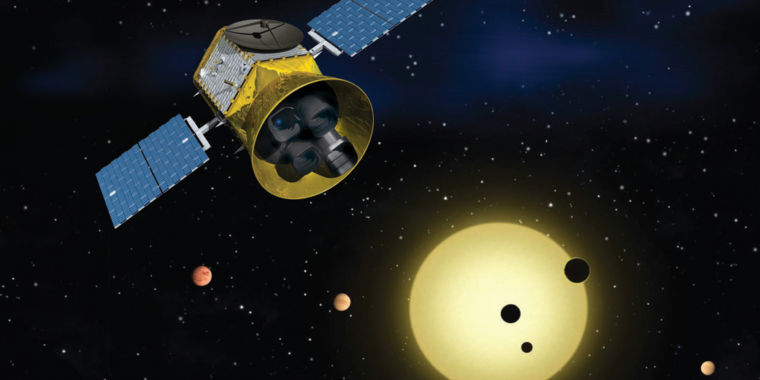
TESS can be thought of as the first half of a Kepler-like program. It will help find a lot of planets, including a few that may be close enough to be imaged by existing hardware. But it’s mostly laying the groundwork for the giant telescopes that are currently under construction, as well as the James Webb Space Telescope, which continues to inch toward launch. These will greatly expand our reach out into the galaxy, vastly increasing the distance at which we can image planetary atmospheres.

The Spanish City That Banned Cars

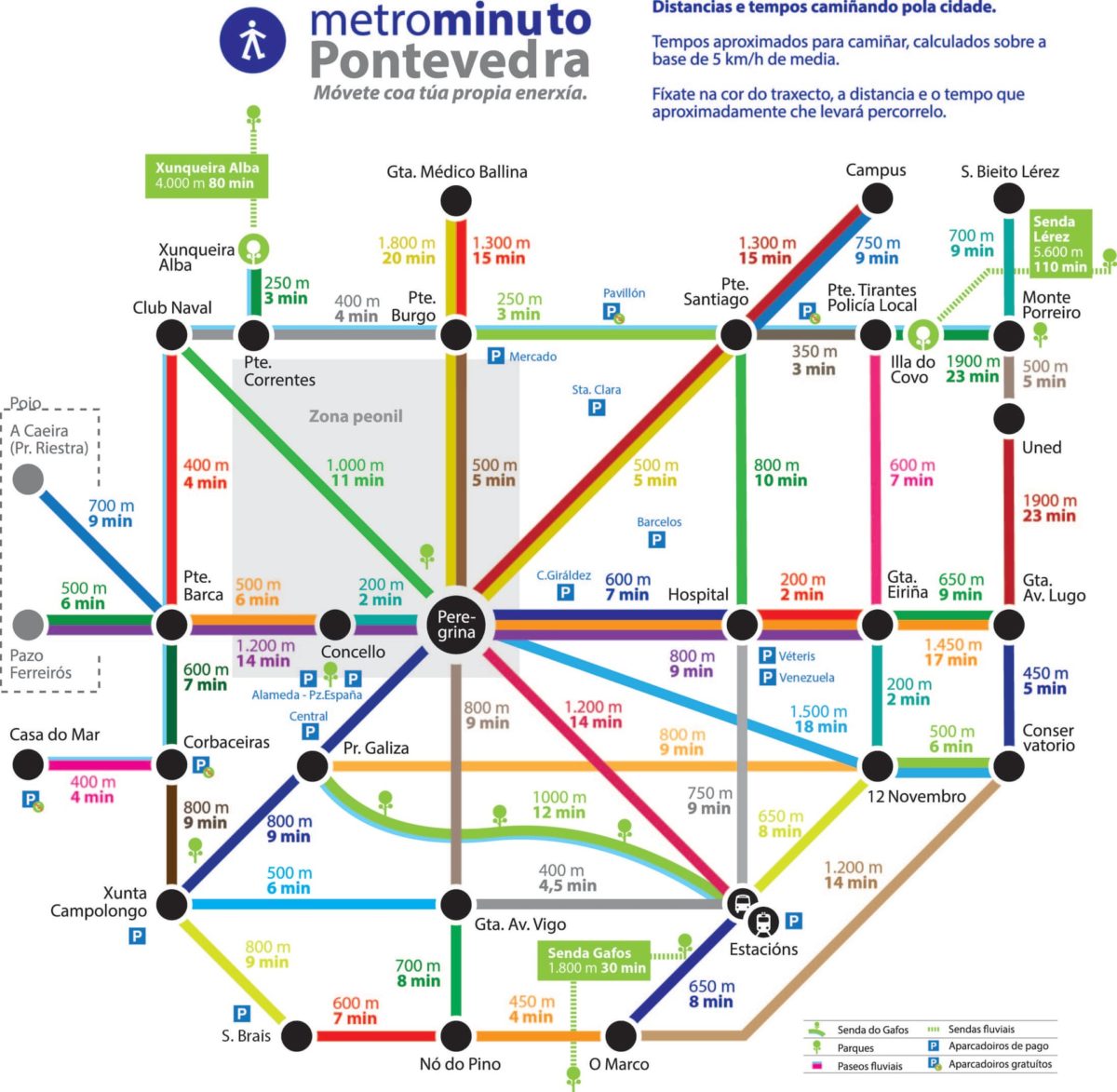
In Pontevedra, the usual soundtrack of a Spanish city has been replaced by the tweeting of birds and the chatter of humans


The Talk of Trees

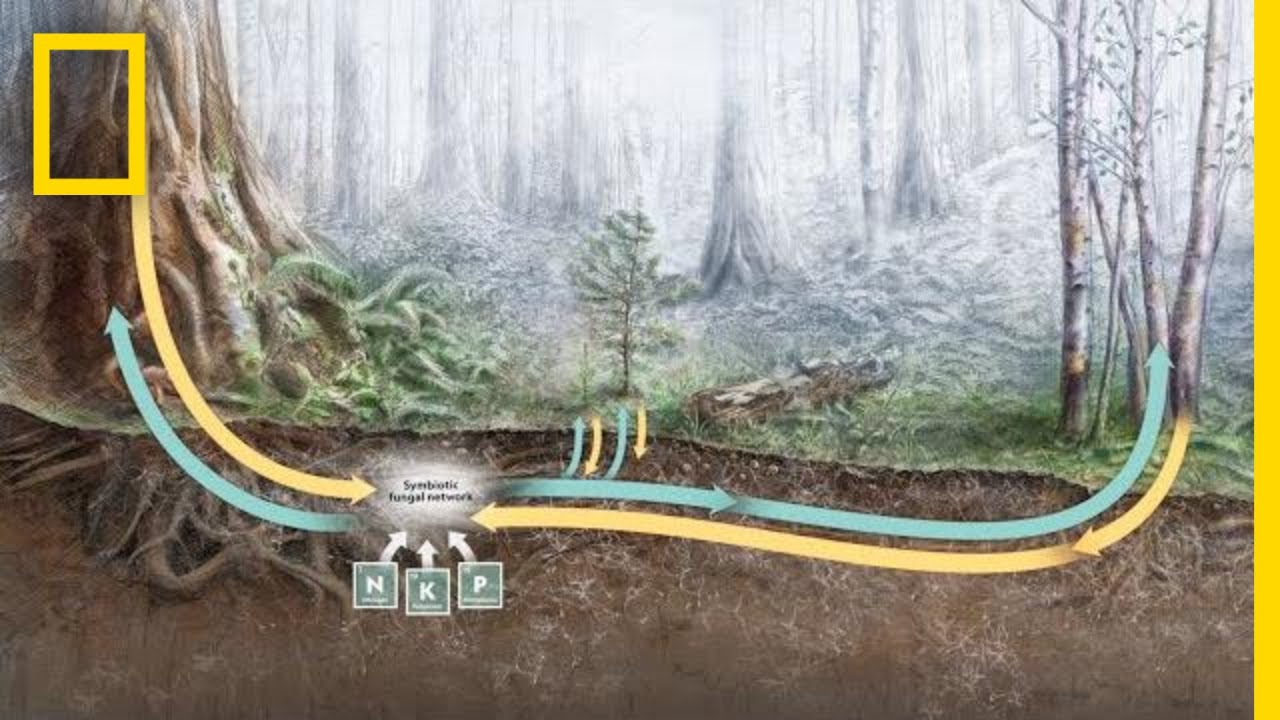
What do trees talk about? In the Douglas fir forests of Canada, see how trees “talk” to each other by forming underground symbiotic relationships—called mycorrhizae—with fungi to relay stress signals and share resources with one another.