Venus: Rich Atmosphere Could Host Microbial Life

A new study from an international team of scientists proposes that microbial life could exist in the clouds of Venus. The exciting hypothesis suggests mysterious dark patches seen in the atmosphere could be something akin to algae blooms seen in oceans on Earth. …..

Around 30 miles (48 km) above the planet’s surface is a lower cloud layer with temperatures around 60° C (140° F) and pressures similar to that of Earth (unlike the planet’s surface with a pressure of 90 atmospheres, equivalent to the pressure felt over a half a mile beneath the ocean). It’s not impossible to think that microbial life could exist in this atmospheric Goldilocks zone, after all, here on Earth microorganisms have been found alive at altitudes as high as 25 miles (41 km).

In addition to these incredibly suitable environmental conditions, it’s a strange and inexplicable atmospheric phenomenon that is really driving the hypothesis. As long as we have had telescopes good enough to observe Venus in detail, we have witnessed mysterious dark patches moving through its atmosphere. These dark patches seem to be composed of sulfuric acid, alongside unknown particles that absorb ultraviolet light.

“Venus shows some episodic dark, sulfuric rich patches, with contrasts up to 30–40 percent in the ultraviolet, and muted in longer wavelengths,” says planetary scientist Sanjay Limaye. “These patches persist for days, changing their shape and contrasts continuously and appear to be scale dependent.”
Original article at Astrobiology
Header photo: NASA


Robot ‘Bees’ For Mars Exploration

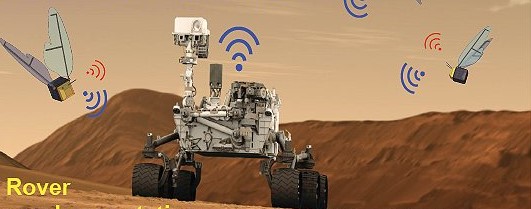
NASA has announced that it has awarded funding to a combined team of researchers from the University of Alabama and an unnamed team in Japan for development of a new kind of Mars explorer. The project team has been awarded $125,000 to develop what NASA calls Marsbees: a swarm of robot bees that could fly in the thin Martian atmosphere and deliver information from their sensors.
Marsbees would be a swarm of “bumblebee size” flapping robots that could cover a far greater distance (with a lot less effort) than a rover could. But that doesn’t mean a rover would be left out: a rover would serve as a recharge station and main communications hub for the bees.
(Header image courtesy NASA)


#TwitterTuesday: The Story of @Dog_Rates: Meet the DogFather

For @dog_rates, Nelson usually tweets twice on weekdays, at noon and 8 p.m. He’s never scheduled a tweet, and he’s the only one who has ever posted (except Blake Shelton, who took over the account for a day last September).

It usually takes about 20 minutes to perfect a caption. Once a tweet goes up, Nelson says he’s “glued to it” like a TV network executive in a control room, watching the number of favorites and retweets climb into the thousands.

But Nelson’s empire is built on more than that. His brand of humor has become world-wide-web famous. For example, his dog ratings almost always exceed 10/10 — because, as he once fired back at a critic upset at inflated scores, all dogs are “good dogs.” The @dog_rates community enjoys a host of inside jokes, like the one in which Nelson frequently faux-reprimands followers for sending in animals that aren’t dogs. He even played a role in developing the language DoggoLingo, popularizing puns like “pupset” and censoring “heck” to “h*ck.” Because dogs just don’t curse.

http://time.com/money/5225272/weratedogs-matt-nelson-interview/


It’s the Future, where’s my *%$&% Jetpack???

Attached to the backpack and positioned above the wearer’s head is a multirotor system—not unlike those you’d find on a drone. This engages to give the wearer extra lift so he can jump two to three times as high as he normally would before eventually floating back to the ground. The overall effect is to make it look as if the person is walking on the moon.

Header photo courtesy Lunavity

Immunotherapy-based Cancer Vaccine Moves To Clinical Human Trials at Stanford

A recent Stanford cancer study that cured 97 percent of mice from tumors has now moved on to soliciting human volunteers for a new cutting-edge medical trial.

The trial is part of a gathering wave of research into immunotherapy, a type of treatment that fights cancer by using the body’s immune system to attack tumors.

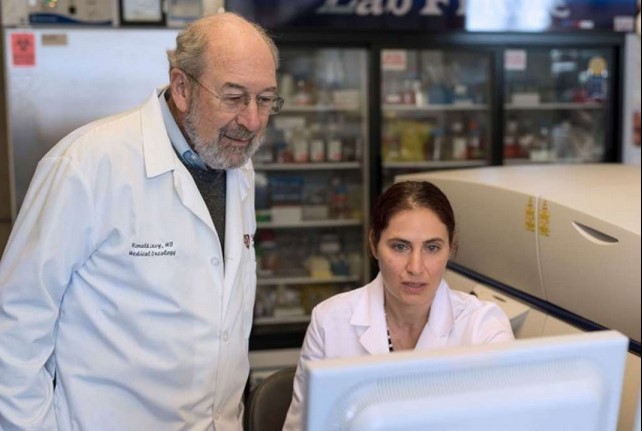
“Getting the immune system to fight cancer is one of the most recent developments in cancer,” Dr. Ronald Levy, a Stanford oncology professor who is leading the study, told SFGATE. “People need to know that this is in its early days and we are still looking for safety and looking to make this as good as it can be.” via SFGATE.

Photo: Stanford Medicine News Center / Header Photo by Lucas Vasques on Unsplash


The Beauty of The Bristol Pound

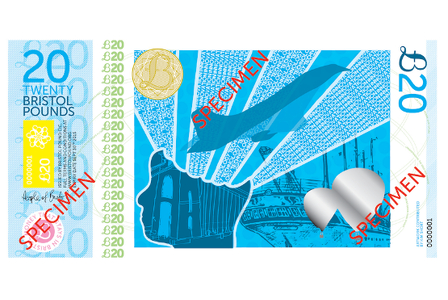
The ‘Bristol Pound‘ is one of the most successful and visible examples of community currency and complementary currency, keeping money IN the local economy of Bristol, UK. It is a  joint not-for-profit enterprise between Bristol Pound Community Interest Company and Bristol Credit Union.


But today let’s simply take a step back just to appreciate its vibrant local designs. Here are some prior notes,

“Graffiti Tiger” by Alex Lucas.

“Hannah Moore & Bristol Old Vic” by Anthea Page / Juraj Prodaj.

Kim Short

and NEW artists have just been announced.

A six-year-old schoolgirl from Waycroft Academy in Whitchurch is one of the artists whose designs will be going on the new Bristol Pound notes from later this year.


♫Won’t you be my neighbor?♫

Does this fellow look familiar?

There’s a ‘Mr. Rogers’ movie on the way!


And in addition, Tom Hanks will star in ‘Are You My Friend‘, about an Esquire reporter whose life was transformed when writing THIS profile.

Fred Rogers has been doing the same small good thing for a very long time…
And here are some more fond remembrances:

The legacy lives on at: https://www.fredrogers.org/

Finding Wi-Fi tricky? Try Li-Fi

What Is Li-Fi? The New Alternative To Wi-Fi
Li-Fi is likely to reshape the world in ways Wi-Fi didn’t, by transmitting data through lamps, streetlights, and more.
Li-Fi is basically just high-speed wireless data transmission . . . through light. That light can come from something as simple as a desktop lamp. The idea is that Li-Fi is built into the functional lighting that you’d want to turn on indoors anyway–except it’s also carrying your data.
Header photo by Valentin Farkasch on Unsplash


‘Third Thumb’ – The Prosthetic You Didn’t Know You Needed

For #TwitterTuesday we share Mashable’s cool summation of Dani Clode’s ‘Third Thumb’ prosthetic.

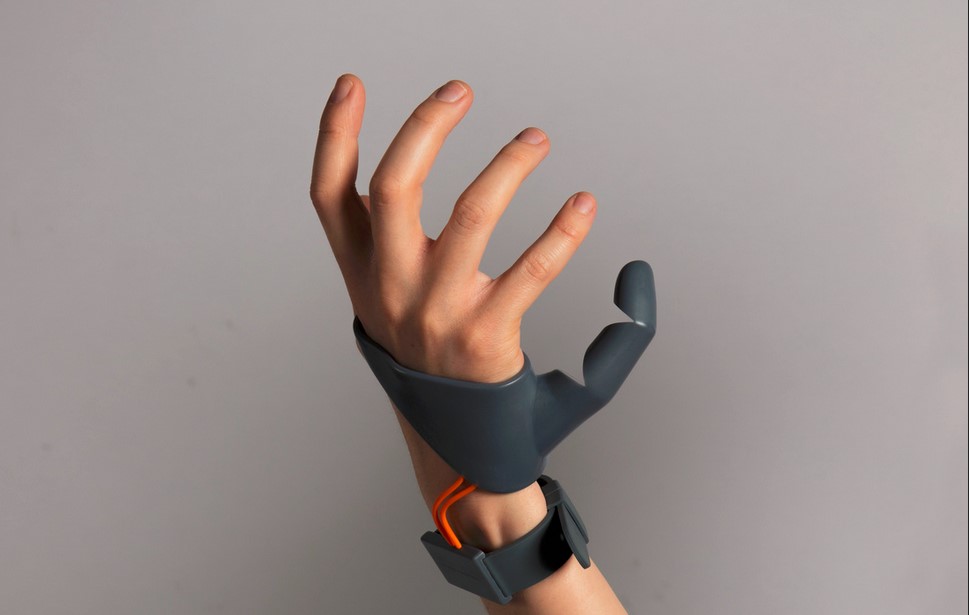
The Third Thumb is a motorised, controllable extra digit, designed for anyone who wants to extend their natural abilities.

A student of the school’s product design masters, Clode created the device as a way to challenge conventional ideas about prosthetics – usually thought of as devices only for people with disabilities.

Didn’t think you needed one? Once you’re ‘all thumbs’ it’s hard to go back.

More:

For her graduate work at the Royal College of Art, Dani Clode created a wearable third thumb that can help its user do more complex tasks.


Project Summary: http://www.daniclodedesign.com/thethirdthumb


Inspire Somalia: Reality TV vs. Fundamentalist Insurgents


A different kind of reality TV show: in 2015 the UN’s “Inspire Somalia” aimed to use culture to increase Somalia’s fragile peace.

So far it’s been well-received. Some great tunes included in the podcast below! Time for a reprise?
Perhaps the ‘developed world’ can take some tips from ‘Inspire Somalia’ and similar reality shows such as ‘Integrity Idol‘.


Reality TV is popular around the world. It’s also roundly mocked as formulaic and contrived. But can that kind of fragile fantasy meaningfully influence the real world?

Podcast Transcript

Check it out for yourself: Facebook page, Twitter

Images courtesy Inspire Somalia, NPR